Do Air Purifiers Work?
According to the CDC, research indicates that people spend approximately 90% of their time indoors.1. That statistic, coupled with COVID-19, West Coast wildfires and other assaults to indoor air quality, interest in air purifiers is on the rise prompting many people to ask themselves, “Do air purifiers work?” The short answer is they do. High-efficiency air filters and purifiers are recommended by the CDC and the American Society of Heating, Refrigerating, and Air-Conditioning Engineers (ASHRAE) as part of a multi-layered approach to improving ventilation and reducing exposure to a variety of infectious diseases.2 Because the air in your home can be more polluted than the air outside, health risks associated with prolonged exposure to indoor air can be greater as well. That’s especially true for individuals susceptible to the effects of exposure, including the very young, the elderly and others who are chronically ill.1 For those reasons, finding the right air purifier for your home and unique needs is important. Effective air purifiers are available from a number of manufacturers, and while there are a number of portable air purifier products on the market, Carrier air purifiers deserve a closer look with their three-step filtration process, 18-speed fan and built-in air quality monitoring.
In this post, we will discuss the airborne pollutants typically found inside many homes, different types of air purifiers and filters, how they work, and what types of indoor pollutants they can effectively mitigate. Armed with the information in this post, you should be confident in your ability to find the right air purifier for your home.
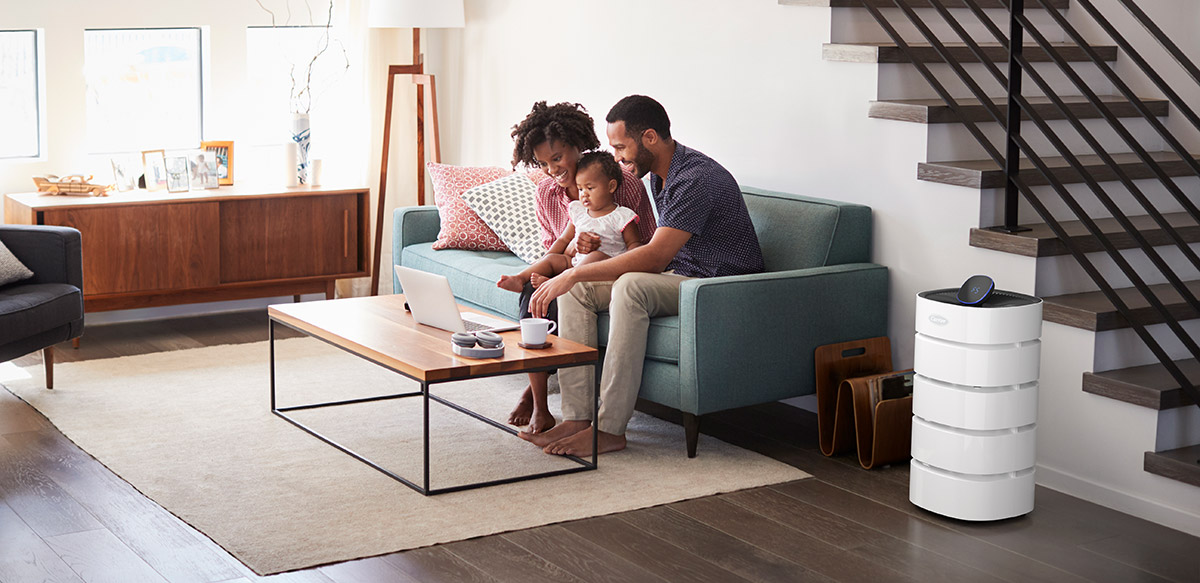
Do Air Purifiers Really Work? The Basics
Answering the question, “Do air purifiers really work?” requires an understanding of the types of airborne pollutants found in most homes as well as the ways different air purifiers work to capture those particles.
Airborne pollutants in your home exist as both particulate matter and gases, and can be further divided into two types based on their origin – biologic and chemical.
Biologic pollutants include bacteria, molds, viruses, animal dander, dust mites, pollen and the like. These pollutants can lead to transmission of disease, trigger allergies and asthma, and can lead to unpleasant symptoms such as sneezing, coughing, dizziness, shortness of breath and more.
Chemical pollutants include carbon monoxide (CO), ozone, tobacco smoke, radon, pesticides and volatile organic compounds (VOCs). VOCs are organic chemicals used as ingredients in many household products and cleaning supplies such as paints, varnishes, glues, art supplies, cleaners, spot removers and aerosol products. These types of pollutants can lead to longer-term health issues including some cancers.1
Of course, not all air purifiers are created equally. Understanding the differences, similarities, pros and cons of each will go a long way towards making a decision that best fits your needs.
Portable, room air purifiers typically use one or more of the following types of filtration:
Mechanical filters: Sometimes referred to as fibrous filters, these use a dense, mesh material or fibrous web that physically traps airborne particulate matter. Mechanical filters are often pleated to create more surface area in a compact space and to allow for greater volume of filtration. Mechanical filters offer a wide range of effectiveness. For the highest level of mechanical filtration, look for a HEPA air purifier. HEPA is an acronym for “high efficiency particulate air” and must be certified to filter 99.97% of particulate matter down to 0.3 micrometers in diameter. Another way to determine the “efficiency” of a filter is to check its MERV (Minimum Efficiency Reporting Value) ratings. The higher the MERV rating, the better a filter is at capturing smaller particles. Mechanical filters must be replaced periodically, typically every 6-12 months.
Activated carbon filters: These fall into the category of “adsorbent media air filters” which are effective against odors and other gaseous pollutants. Adsorbent filters use a combination of physical and chemical processes to remove gaseous pollutants or render them harmless. Because they are less effective against particulate matter they are often used in conjunction with a mechanical filter. Activated carbon filters typically have a shorter life than mechanical filters and must be replaced more frequently.
Electronic air cleaners: Electrostatic precipitators (ESPs) and ionizers are two examples of electronic air cleaners. Both operate using a similar principle – applying an electronic charge to airborne particles which are then electrostatically attracted to oppositely charged collector plates, filters or other indoor surfaces. ESPs in particular typically offer high removal efficiency, but can decrease in effectiveness as collector media become full. Electronic air cleaners will typically require simple, periodic maintenance, depending upon the type. Some will require cleaning of collector plates, and others may require replacing proprietary filters specific to that particular air purifier.
Ultraviolet germicidal irradiation (UVGI): This method uses UV lamps to kill microorganisms such as viruses, bacteria and fungal spores. To be effective, UVGI air purifiers must combine high power and long enough exposure time. Because pollutants passing through the filter are moving too fast and thus shortening exposure time, UV lamps are most effective at inactivating microbes on cooling coils and other surfaces. UV lamps lose their effectiveness over time and must be replaced periodically, typically after about 9,000 hours of usage, or approximately every 12 months.
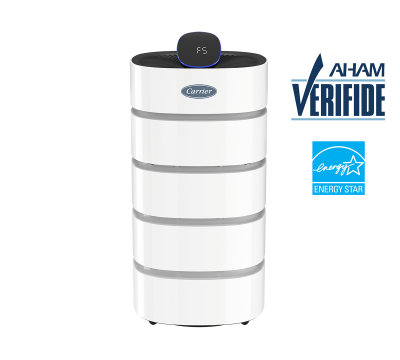
Some very effective air purifiers combine filtration methods to create a more effective total package. For example, the Carrier Air Purifier offers a three-step process that provides very effective purification of both particulate matter and odors. More details on this product are provided in the next section, “How Well Do Home Air Purifiers Work?”.
How Well Do Home Air Purifiers Work?
While the answer to the question of how do home air purifiers work may be a bit complicated, it should be noted that they can be a very effective tool in helping clear the air in your home. Depending upon the efficiency of the filter, many are capable of trapping common airborne particles such as pet dander, dust mites, pollen and mold spores. They can be especially productive when combined with two other key factors – eliminating or removing the sources of the air pollution and improving ventilation.
Additional factors affecting an air purifier’s ability to provide efficient air purification include the type of filtration used, MERV ratings, air exchanges per hour (ACH), proper sizing, selective placement, hours of operation and more.
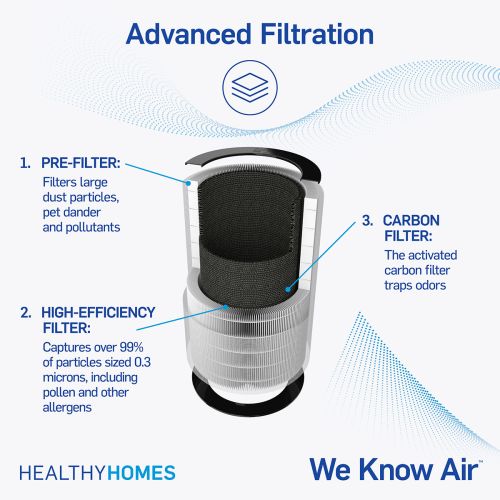
Air purifiers that combine multiple filtering capabilities within one unit can be an especially powerful defense against airborne pollutants. One such example is the portable room air purifier by Carrier. A Carrier air purifier combines three filtration technologies to remove particles and create healthier indoor air. Here’s how it works:
- An 18-speed fan can automatically adjust between speeds as needed to draw air into the unit’s filters, or it can be set by the user for a specific fan speed based on individual preference
- Large airborne particles like dust, dirt and pet dander are collected by the unit’s pre-filter
- Next, an advanced, high-efficiency filter captures more than 99% of airborne particles down to 0.3 microns in diameter, including pollen
- Finally, an activated carbon filter removes odors from the room’s air
In addition to helping reduce air pollution, Carrier air purifiers continuously sample indoor air quality and displays the results on an easy-to-read LED screen that changes color based upon four different air quality grades – good, moderate, bad and very bad.
While some manufacturers may publish air exchange rates meant to communicate how long it takes for the air purifier to clean the air within a room, actual performance can vary based on the type of filter and size of the room. Carrier air purifiers are available in two sizes, making it easy to decide which model is right for you. The standard unit works for rooms up to 430 square feet, and the XL model is appropriate for larger rooms up to 560 square feet.
To help you determine which air quality solution may work best for you, take our quiz - healthier air starts with knowing what's in it.